
How a song I could not yet understand became the beginning of a lifetime spent learning languages.
There is always a first time, though it is rarely the moment you think it is.
The first class does not count — not because nothing happened there, but because what happened there was instruction rather than encounter. The first time is something different. It is the moment when the language stops being a subject and becomes a presence — when it ceases to be something you are being taught and becomes something you have felt, something that has affected you in a way that learning the periodic table or the dates of historical battles or the rules of quadratic equations has not and will not.
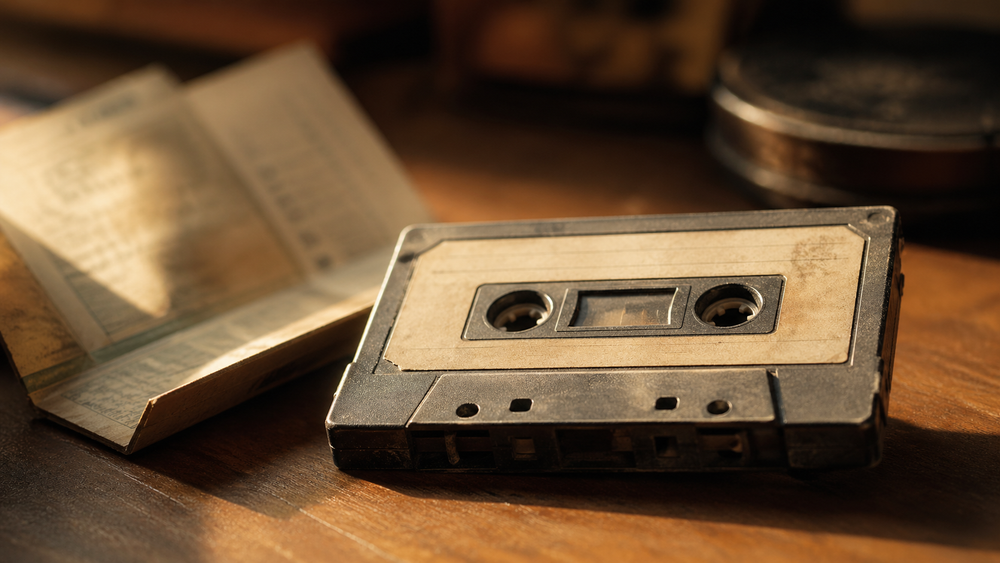
Mine arrived in the form of a cassette.
The kind in a thin plastic case, with a paper insert folded into quarters that listed the track titles in small type. The cassette belonged to my father. He is gone now, and so the cassette carries more weight than it once did — it is one of those objects that survive the person who owned them and take on, in their survival, a kind of impossible double existence: still the same physical thing, the same yellowing plastic, the same slightly worn label, but now also an artifact of someone who is no longer here to tell you what the music meant to them, or when they first heard it, or why they kept it.
I do not know why my father had that cassette. I know only that it was there, and that I found it, and that what happened when I played it led me somewhere neither of us could have anticipated.
The cassette carried a recording by Los Panchos — the Mexican-Puerto Rican trio who were, across the middle decades of the twentieth century, among the most celebrated interpreters of the Latin American bolero. I did not know any of this at the time. I did not know what a bolero was, or who Los Panchos were, or what the tradition they were working in represented.
What I knew was that I had put the cassette into a player, pressed play, and heard something that held my attention.
The song was Historia de un Amor — "A Love Story." And I was not quite ready for it.
It is not a simple song, though it sounds simple. Written by the Panamanian composer Carlos Eleta Almarán in 1955, reportedly as an elegy for his brother's late wife, it is a love song in the form of grief — an attempt to describe something so complete and so irreplaceable that its loss is the loss of the person who experienced it, the loss of an entire way of being in the world.
Ya no estás más a mi lado, corazón. En el alma sólo tengo soledad. Y si ya no puedo verte, ¿Por qué Dios me hizo quererte? Para hacerme sufrir más.
You are no longer by my side, my heart. In my soul I have only solitude. And if I can no longer see you — why did God make me love you? Only to make me suffer more.
I did not understand any of this the first time I heard it. My Spanish was non-existent — I was hearing the song in the way that a person hears music in a language they do not know, which is to say primarily as sound, as texture, as the shape of emotion before the emotion has been assigned its specific linguistic content.
But the sound was enough.
I should say something here about the particular position from which I was hearing it, because it matters more than it might initially seem.
Indonesian is my native language — the language of my childhood, my family, the deepest layer of my inner life. English I had been learning since elementary school, and by the time I found my father's cassette I was comfortable enough to live and think inside it — but it was still a language I had reached for rather than been given, a language I had crossed a threshold to enter rather than one I had been born on the right side of.
I was, in other words, already someone who knew what it felt like to move between languages, to inhabit a linguistic world that was not the first one. What I had not yet done was hear an entirely foreign language as music — as the specific beauty of a tongue at its most expressive, stripped of practical purpose and offering nothing but the experience of itself.
That is what Historia de un Amor gave me. Something in the acoustic properties of that Spanish — in the particular way the vowels were held and the consonants released, in the three-part harmony that Los Panchos brought to the song — reached something in me that Indonesian, for all its intimacy, and English, for all its acquired fluency, had not reached in quite the same way.
Because the reaching required distance.
It required the specific quality of encountering something from outside, of hearing a human way of naming and feeling that was organized differently from any of the ones I had previously known.
What I felt was not sadness, though the song is a sad song. What I felt was something closer to recognition — the specific and paradoxical experience of recognizing something you have not previously seen, which is one of the stranger experiences available to a person.
I recognized the language not as a specific system I could decode but as a world I wanted to be inside.
The feeling was immediate and physical. I rewound the cassette and listened again. And then again. And then again, sitting in the specific quality of light that I associate with the memory, turning the cassette case over in my hands, looking at the photograph on the insert — the three men of Los Panchos, formally dressed, carrying their instruments with the ease of people who have been carrying them for a long time — and noticing, with the sort of certainty that comes before understanding rather than after it, that something had happened.
I did not yet know, sitting there, that the cassette had also happened to my father.
That he too had held this object and heard this song and felt — what? I do not know what he felt. I never asked him, which is the kind of omission that announces itself too late, in the particular silence that follows a person's absence rather than in the ordinary silence of their presence when a question could still be asked.
What I know is that he kept it. That it was among his things. That the song meant enough to him to preserve the physical object through the years and the moves and the accumulations and the dispersals that make up a life.
And his cassette was, in some quiet way, the start of mine.
There is something I find moving in the chain.
The Panamanian composer grieving his brother's wife and writing a song about it in 1955. Los Panchos recording it with the warmth of three voices finding each other across the space of a microphone. My father acquiring the cassette and keeping it for reasons I will never fully know. And then me, finding it, pressing play, and beginning a relationship with a language I have continued with in the decades since.
None of it was planned. All of it had to happen.
The song is about loss. The song is also the story of how I found something I have continued to look for.
Years later, when my Spanish was good enough to understand the words of Historia de un Amor fully — not just sense their emotional weight but parse their content, follow the syntax, feel the grammar working beneath the melody — I went back to the cassette. I played the song, and something I had not quite expected occurred: understanding the words did not diminish the original feeling. It deepened it.
The Spanish of Historia de un Amor — its emotional vocabulary, its directness in the face of grief, its willingness to hold the full weight of human loss without irony or deflection — was not merely a different code for the same content. It was a different way of being in the world.
And my father had known this. He had held this cassette. He had heard this song. He had kept it.
I did not know, then, that I was also keeping something of his every time I returned to the language the song had opened in me. I know it now. The language is partly his — not because he taught it to me, he did not, but because he left the door ajar, in the form of a cassette in a yellowing plastic case, and I walked through it, and I have remained inside it ever since.
Es la historia de un amor.
— A.C. Maas