
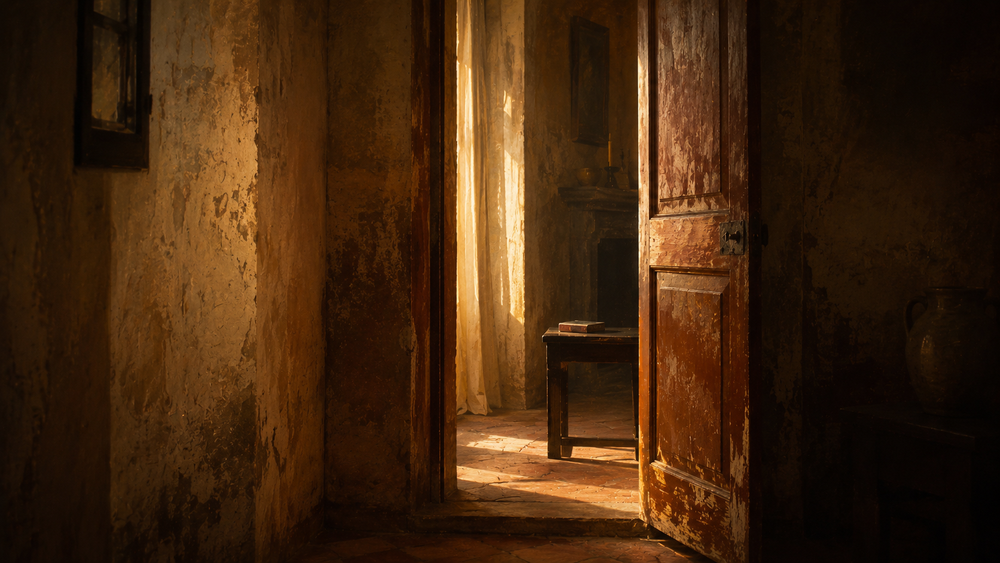
No two of them came the same way. The list of how the languages came is a kind of portrait of the life that received them.
There is no orderly way to acquire languages across a lifetime. The textbook framing — choose a language, find a course, study it to fluency, move on to the next — describes how some languages enter some lives, but it does not describe how most of the languages have entered the lives I know, including mine. Languages arrive, in the lives of the people who end up loving many of them, by routes that look more accidental than chosen, more circumstantial than designed.
What strikes me most, looking back across the languages I have spent decades learning, is the variety of the entries. No two of them came in the same way. The list of how the languages came is, in some sense, a kind of portrait of the life that received them — because the way a language enters a life tells you something about both the language and the life it has entered.
This is the account of those entries. Not the deep account, which is the work of the longer essays in this collection and of the books they accompany, but the surface map: how each of the languages I have come to know found me, and what each of them taught me about how a language can find a person.
Indonesian was the first, which is to say that it was not a language I came to at all. It was the language that was already speaking around me when I arrived. My mother tongue, my home, the language in which the deepest layer of myself was made — it preceded any choice and any awareness of choice, and it has remained the ground floor on which everything else has been built. There is no story of entry for Indonesian, only the story of having always been inside it.
The first language I had to enter — to pronounce, to make my mouth do, to recognize as a system rather than as the natural environment — was Arabic. I was five years old, sitting cross-legged on the floor of a small room in our family home, with a wooden lectern in front of me and the Quran open on it, and an older woman who had been hired to teach me and my siblings how to pronounce the holy text correctly. Arabic came to me as religion before it came as language. Its first home in my life was the lectern and the recitation, not the classroom and the dictionary. What I will say is that Arabic taught me the lesson that made the other entries possible: that a language was a thing one entered, that the entry happened slowly, and that the sounds came before the meanings and made the meanings possible.
English came earliest after Indonesian, and most fluently, because English in Indonesia is not optional for the curious — it is the door to almost everything. I read it before I spoke it well, the way most non-native speakers do, and I still find the written word in English easier than the spoken. English was the first language I chose to enter, meaning the first language I had to cross a threshold to inhabit, the first language that was not given but found. The threshold was an ordinary one. I was a curious boy. The English was waiting on the other side. Crossing was what curious boys did with their afternoons.
What English taught was that crossing a threshold could be done by sustained interest alone. There was no specific origin moment, no afternoon I could point to as the beginning. There was only the slow accumulation of curiosity into competence, and at some point the competence was enough to live inside. I have wondered, since, whether the absence of an origin moment is the most distinctive feature of English in the inventory of my languages — every other language has an entry I can name. English just opened, gradually, and at some point I was on the other side of it.
The first language to come with a date attached was Italian. The date was 1990. I was an adolescent, and the World Cup was being held in Italy. Some quality of the tournament — the country itself, hosting it; the Italian national team and its specific manner of play; the broadcast in a way that gave the country a presence beyond its football — produced in me a fascination I did not entirely understand at the time and have not entirely understood since. The fascination expressed itself as language. I wanted to know how to speak Italian.
I had no classroom available, and Italian was not a language Indonesian schools taught. So I learned it on my own, working through whatever materials I could find in the years before the internet had made language learning easy — cassettes, books, dictionaries, the occasional film and music. The Italian I built was an autodidact's Italian: rough at the edges, lacking the structural rigor a formal program would have given it, but real. For a few years in adolescence and early adulthood I was inside the language often enough to feel I belonged there briefly. While I have not been current in the language for two decades, the relationship has stayed — in the back of my mind, in the way some Italian phrases still arrive in Italian rather than translated, in the persistent feeling that the language is not finished with me and may not be finished for a long time. Italian was the first language that taught me that a relationship with a language could be patient with its own incompleteness.
French followed, through formal classes, years before I began any serious work on Spanish. The irony of what would later become the Spanish love story is that my mind was in French while my ear was already turning toward Spanish — and the divergence between the two took its own time to resolve. The formal study of French taught me what classroom language learning actually does: it gives you a structural skeleton that informal acquisition does not. Vocabulary lists, conjugation tables, the rules of syntax laid bare and memorized — these are not the tissue of language love but they are the bones, and a body without bones cannot stand. My French is good for reading and serviceable for talking, and it has its own permanent claim on me, separate from the claim that Spanish makes. French taught me what study could give that love alone could not.
Spanish came through a cassette my father kept and a keyboard he played in a quiet room. The first encounter was musical rather than linguistic — bolero rhythms and a particular Mexican-Puerto Rican warmth that reached me as sound and feeling years before I had the apparatus to understand a single word of it. Study came later, slowly, and was in some real sense an attempt to deepen something that had already taken hold.
This is the most distinctive feature of Spanish in the inventory of my languages. Every other language I have come to know was approached from the outside in — I noticed it, decided to learn it, and the love, where it developed, emerged as a result of the engagement. Spanish was the reverse. The love came first, in the form of a song I did not understand, and the language was what I went looking for to honor what the song had already given me. Languages approached from love tend to develop a different kind of relationship than languages approached from interest or utility — deeper, slower, more patient with the long incompleteness.
German came later, out of pure curiosity. I had no specific reason to want to learn it, no upcoming trip, no German friends, no professional need. I started because the language interested me and continued because the language repaid the effort. German taught me that curiosity alone could sustain a language project for years — that a language did not have to be useful to be worth pursuing, did not have to be loved at first encounter to become valuable. Some languages enter on the strength of a fascination and grow into something more substantial through the patient work of paying attention. German was that, for me. It is also the language whose entry has the least romantic origin story of any in this inventory, and the most honest about what learning a language often actually is: a project you start without knowing why, and continue because something in the work satisfies you.
Dutch arrived during a period of academic immersion that combined formal study with the ambient presence of the language in everyday life. I was in the Netherlands for a Master's degree, and I took a Dutch course alongside my academic work — but the course alone would not have produced what immersion did. Nearly all Dutch people I met spoke English fluently, and most of my daily transactions could have been conducted entirely in English; many foreigners in the Netherlands never learn Dutch for exactly this reason. What changed things for me was the willingness to use Dutch in the small daily exchanges where English was not strictly necessary — the neighbour, the bicycle repair shop, the halal butcher, the restaurant where I worked part-time — and the constant ambient presence of the language everywhere I went. My ear became accustomed to Dutch as it was actually spoken among the locals, on the streets and in the shops. The classroom gave me the structure; the streets gave me the texture. Dutch taught me what immersion does that classroom study alone cannot: it makes the language ordinary. The Dutch I had at the end of my time there was less broad than the French I had after years of classroom study, but it was rooted in a way the French was not, because the words I knew had been learned in the act of using them.
Japanese arrived through a different door than the others. My wife studied in Japan in her younger years and worked as a Japanese interpreter and teacher until our first two children were toddlers. The language was a substantial part of her life since I knew her. When I attended a Japanese course for a year in my twenties, I was responding partly to a general curiosity about a language whose grammatical structure was completely unlike anything I had previously encountered, but I was also responding, I think, to the proximity of someone for whom Japanese was a serious life project. The language stays close to me through my wife rather than through my own ongoing study, and I am at peace with that arrangement. It is one of the languages I have touched more lightly than I have mastered, and the touching itself is a form of knowledge I would not give up.
Norwegian came through opportunity. I took a Norwegian course because it was offered at my workplace and because I was curious about a language I had never imagined learning. The course ran for some months. I worked through it carefully, learned what was teachable in the time we had, and emerged with a working understanding of a language I had not previously known anything about.
What Norwegian taught me is something none of the other languages in this inventory taught: the experience of learning a language without falling in love with it. I find Norwegian interesting, but I have no desire to pursue it further. The course was a good thing, and the little competence it gave me is real, but the language has not called me back the way the others have. Some languages stay with you; others, you study and set down. Norwegian is the second kind, and the recognition that the second kind exists is part of what knowing many languages eventually teaches.
Portuguese also came through work, by accident more than design. My other workplace offered a Portuguese course one year, and I took it, and at the end of the course there was a prize for the student who finished at the top: a return ticket to Brazil. The ticket was mine. I went. The trip was the gift the language gave me back for learning it. Portuguese taught me that languages can come as side-effects of other things — of a workplace decision, of a course offered for unrelated reasons, of a prize that was not the original point. My Portuguese is rusty now, but I can still read a Brazilian news article and follow most of it, and that is enough to keep it alive. Portuguese is the language of the unexpected gift in my collection.
What I notice, looking at the entries together, is that no two of them came in the same way, and no single principle organizes them. Some came primarily through love; some primarily through study; some through accident; one through music my father made; one through marriage; one through curiosity that had no specific destination; one through a workplace course that turned into a trip; one through an offer I accepted out of curiosity, and set down when the course was over.
Most of them came through more than one channel — a course supported by ambient presence, a love supported by formal study, a curiosity sustained by accumulated exposure. The textbook framing of language acquisition — choose, study, complete — describes none of them accurately. Each language entered through its own door, and the door was rarely the one I would have predicted in advance.
The deeper observation is that the variety is not incidental. It is part of what makes the language lover's life what it is. A person who learns multiple languages all through the same method — say, through formal academic study — would have a different relationship with language than a person who learns the same number of languages through different routes. The variety of entries is what produces the variety of relationships. Each language teaches something different about how a language can come, and each one leaves a different mark on the self that received it.
I do not yet know which languages will enter next, or how. There is at least one language still calling, quietly, from outside the collection so far, and I have not yet decided whether to answer. What I know is that if I do answer, it will probably not arrive the way any of the previous ones did. It will find its own door. That is what the languages have taught me about how languages come.
— A.C. Maas